


One of the first questions we ask when setting up a new site is what the crew can access during the day. Parking, amenities, transport links. And increasingly, food.
On most projects, teams have options. A servo around the corner, a food truck that parks up at lunch time, a sandwich shop a short walk away. But some sites don't have any of that. And when you're running 150 workers in a growth corridor with nothing nearby, people either bring everything from home or lose 20 minutes driving to find something.
That was the reality at one of our newer NSW sites. No shops locally. No main road nearby. No quick walk to anywhere useful. The site manager put it plainly: everyone had to leave site just to eat.
Site team wellbeing has always been part of how we think about project set-up. Access to food and drink that actually sustains people through a physical working day isn't an afterthought - it's part of looking after the team properly. On a site this isolated, we needed a practical answer to both problems at once.
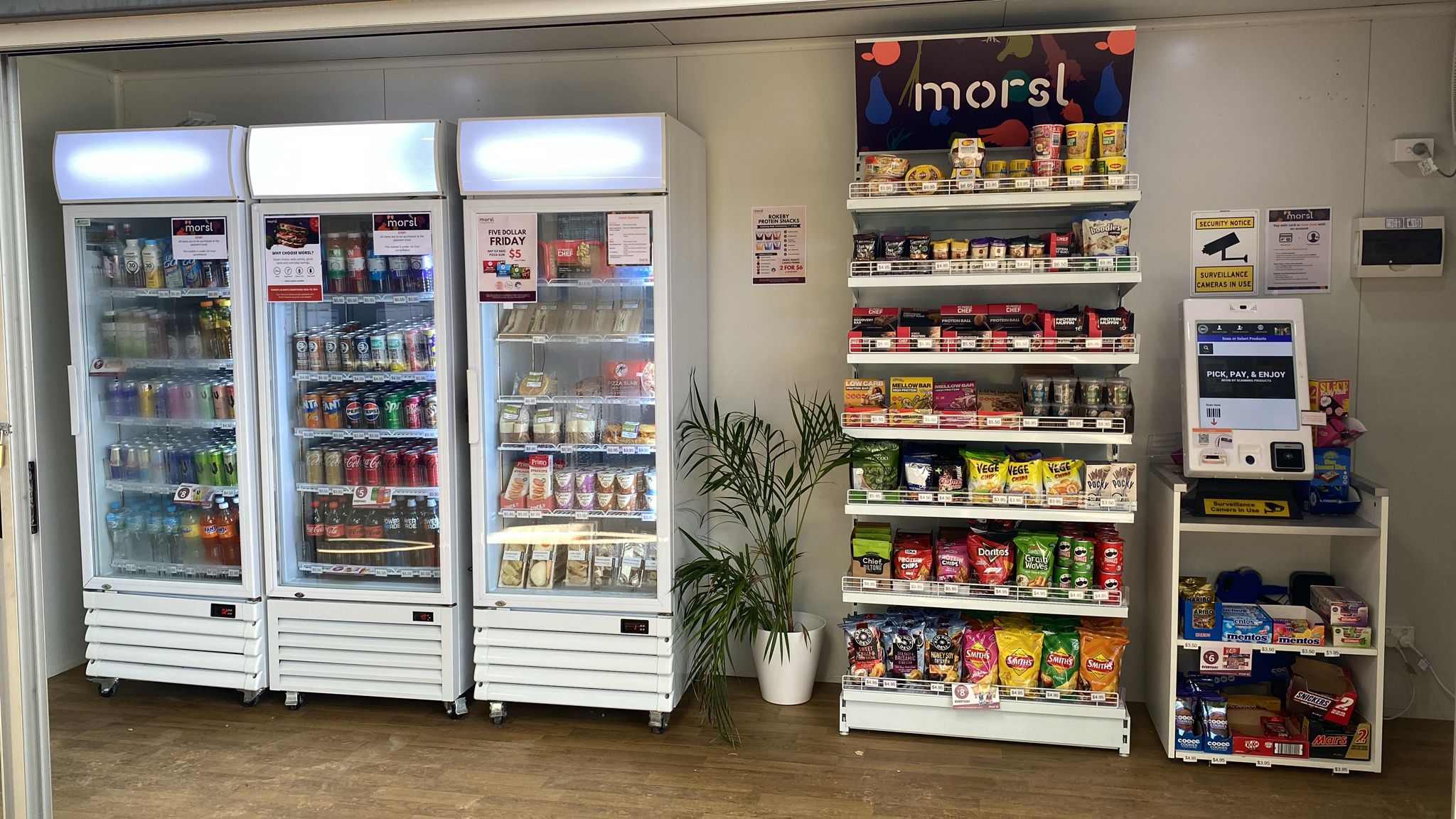
We partnered with Morsl to trial a self-serve smart canteen on site. The concept is straightforward: a stocked kiosk that workers can access any time, scan what they want, and go. No one waiting to serve. No queue. If eight people walk up at break time, eight people walk in and out at the same time.
The site manager was candid about it: "I was a bit apprehensive at first." That's fair. A new piece of kit on a busy site is another thing to manage. But the kiosk connects remotely, can be monitored without anyone needing to be physically there, and any issues can be resolved without the Morsl team needing to come on site.
Given the option of something quick and convenient, site teams weren't just grabbing chips and a Coke.
More than a third of purchases were substantial food items: ready meals, fresh food, chilled and frozen options. One in three products chosen was a healthier pick. Hydration-focused products, drinks and electrolytes, made up one in ten purchases.
On Saturdays, when most food options simply don't exist for a site workforce, the kiosk still turned over 5% of all transactions. That's workers on weekend shifts who would otherwise have had nothing.
None of this happened because we told anyone what to buy. It happened because when you give people a real choice at a convenient time, they make reasonable decisions.
This is the first Taylor site to run a Morsl kiosk. The decision came down to two things: workers on this project were too far from any food and drink options to access them without losing meaningful time from their day, and we wanted to make sure the team had access to proper nutrition while they were on site. The kiosk addressed both.
The thing that makes it work isn't the technology. It's the thinking behind it: that a well-fed crew is a better crew, and that looking after people well - including how they eat during a long shift - is worth doing even if it's not on the critical path.


 Previous Article


